
Podcast
Faruk Toprak ile Yapay Zeka ve Teknoloji
Two things get sold to you about artificial intelligence: fear or magic. Neither one makes you money. I’m Faruk Toprak and I take brands to measurable growth in digital. 106 episodes so far.
Every Wednesday I ask a single question: is this technology actually making you money, or is it just keeping you busy? AI-assisted ad management, automation and CRM systems, e-commerce, consumer psychology, and how algorithms really make their decisions.
We don’t chase trends. I don’t talk received wisdom, I talk systems that work - unfiltered, applicable episodes that show you the money left on the table.
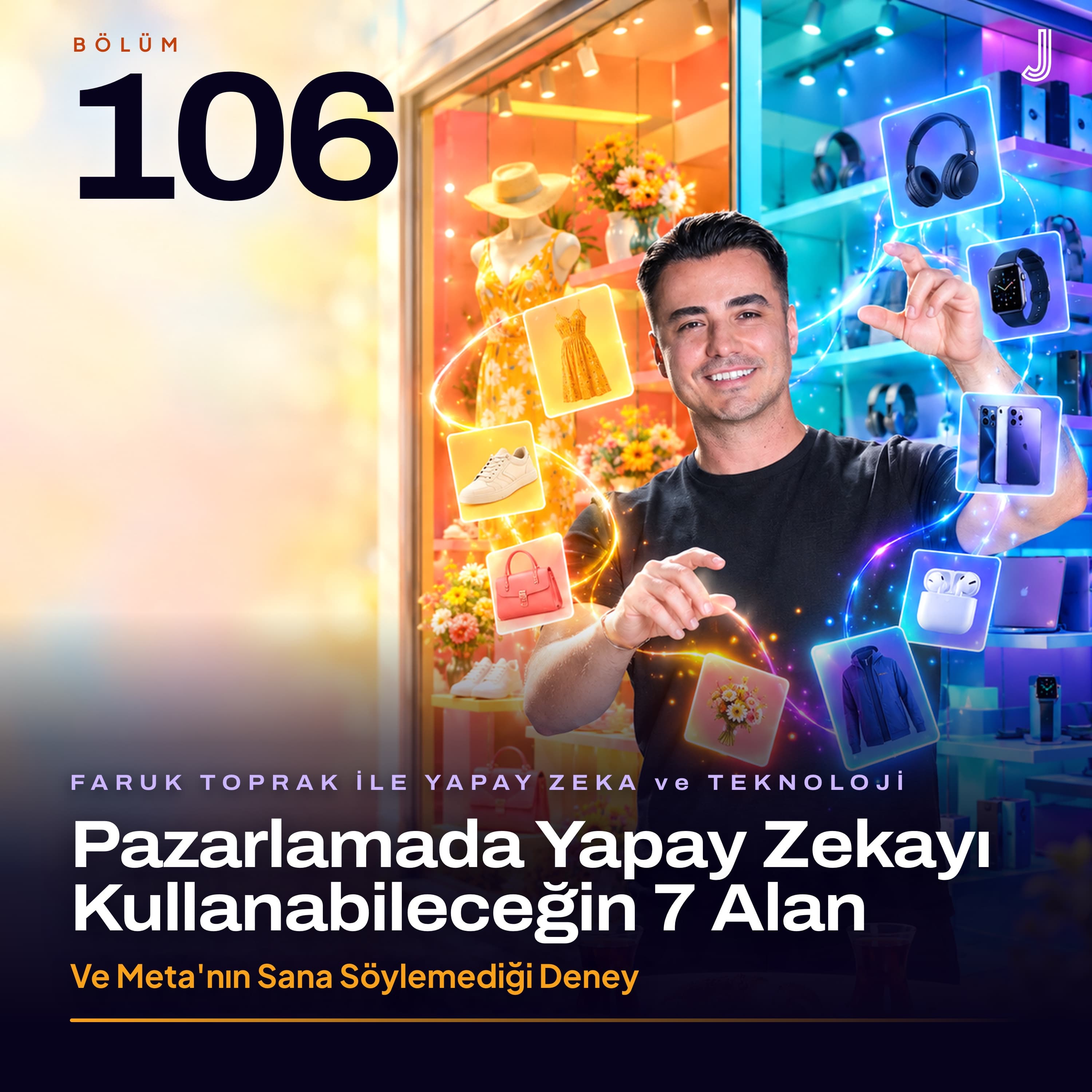
#106 · Pazarlamada Yapay Zekanın Gerçekten İşe Yaradığı 7 Alan ve Reklam Panelinin Size Göstermediği Deney
October 22, 2026· 14 min
All episodes
- Listen ↓
#106 · Pazarlamada Yapay Zekanın Gerçekten İşe Yaradığı 7 Alan ve Reklam Panelinin Size Göstermediği Deney
· 14 min
0:000:00Pazar sabahı kahvaltı masasında siz ve anneniz aynı anda aynı alışveriş uygulamasını açıyorsunuz ama aynı vitrini görmüyorsunuz. Trendyol'un CEO'su Erdem İnan, platforma her gün gelen 17 milyon ziyaretçinin her biri için ayrı bir sayfa şekillendirebildiklerini söyledi. O vitrini her sabah bir insan değil, yapay zeka diziyor. Siz tesadüf sanıyorsunuz, makine buna strateji diyor.
Pazarlamada yapay zeka nerede kullanılır, gerçekten işe yarıyor mu, nerede çuvallıyor? Bu bölümde bu soruları 7 alanda, gerçek şirket örnekleri ve araştırma rakamlarıyla cevaplıyorum. TÜİK verilerine göre Türkiye'de yapay zeka kullanan şirketlerin yüzde 51'i onu en çok pazarlama ve satış için kullanıyor. Yani bu bölüm, şirketlerin yarısının şu an masada çevirdiği işin içini açıyor. Reklam paneli hiç görmemiş biri de rahatça takip edebilir.
Bu bölümde konuştuğumuz 7 alan
• İçerik üretimi. Klarna bir kampanya görselini hazırlama süresini yapay zekayla 6 haftadan 7 güne indirdi, ajans maliyetini yüzde 25 düşürdü. Aynı yıl Coca-Cola'nın yapay zekayla yeniden yapılan Noel reklamı ise ruhsuz bulunup sosyal medyada tepki çekti.
• Kişiselleştirme. McKinsey'e göre insanların yüzde 71'i markaların kendisine özel davranmasını bekliyor. Mahalle kasabının samimiyetini milyonlarca kişiye taşımak ve küçük bir butiğin bunu tek bir e-postayla nasıl yapabileceği.
• Reklam hedefleme. Meta, Advantage Plus kullanan reklamverenlerin ortalama yüzde 22 daha yüksek getiri aldığını söylüyor. Bağımsız ölçüm şirketi Haus'un 640 deneyinde ise markaların yüzde 58'inde elle kurulan klasik kampanyalar daha iyi çıktı.
• Gelen müşteriye hızlı dönüş. Harvard Business Review'daki araştırmaya göre bir saat içinde dönen şirket müşteriyle görüşmeyi yaklaşık 7 kat daha fazla başarıyor, şirketlerin yüzde 23'ü ise forma hiç dönmüyor. Sesli yapay zeka asistanının bu açığı nasıl kapattığı.
• Müşteri hizmetleri ve sohbet asistanları. Klarna'nın yapay zeka asistanı ilk ayında 2,3 milyon konuşma yapıp 700 çalışanın işini gördü, bir yıl sonra şirket yeniden insan temsilci almaya başladı. İyi bir yapay zeka asistanı ile 20 dolarlık ChatGPT arasındaki fark.
• Yapay zeka aramalarında görünmek. İnsanlar artık Google yerine ChatGPT'ye soruyor. Gartner klasik arama hacminin yüzde 25 düşeceğini tahmin ediyor. Yapay zekaya sektörünüzü sorduğunuzda markanızın adı geçiyor mu?
• Dil duvarını yıkmak. Trendyol'un kendi dil modeliyle satıcılar ürünlerini 10 dilde satabiliyor. Gaziantep'teki ayakkabı ustası Almanca bilmeden Almanya'daki müşteriye cevap veriyor.
Bu 7 alanın ortak dersi şu. Makine size hız ve ölçek veriyor, ama hangi işi makineye verip hangisini insanda tutacağınızı bilmezseniz o hız sizi duvara çarpıyor. Pazarlamada artık yarış kimin daha çok yapay zeka kullandığı değil, kimin onu daha doğru yere koyduğu.
🎁 Joy Akademi'deki reklam, pazarlama ve yapay zeka eğitimlerinde podcast dinleyicilerine yüzde 30 indirim var. Ödeme sayfasında PODCAST kodunu yazmanız yeterli, alt ve üst limit yok. joyakademi.com
🚀 Reklamlarınızı kasanın diliyle yönetmek, sitenize sohbet asistanı ya da gelen her müşteriyi saniyeler içinde arayan sesli asistan kurmak istiyorsanız joykek.com üzerinden bana ulaşabilirsiniz.
Kaynaklar. TÜİK Yapay Zeka İstatistikleri 2026, Trendyol CEO Erdem İnan Slush'D İstanbul konuşması (Ekim 2026), Klarna 2024 açıklamaları, Coca-Cola Holidays Are Coming yapay zeka reklamı (2024), McKinsey Next in Personalization (2021), Meta Advantage Plus verileri, Haus Meta artımsallık raporu (640 deney), Oldroyd ve arkadaşları The Short Life of Online Sales Leads (Harvard Business Review, 2011), Klarna CEO Bloomberg röportajı (2025), Gartner arama hacmi tahmini (2024).
Faruk Toprak ile Yapay Zeka ve Teknoloji her Çarşamba yeni bölümle yayında. Bu bölümü her gece "bugün Instagram'a ne atsam" diye telefonun başında saatlerini yakan butik sahibi arkadaşınıza gönderin.
#yapayzeka #pazarlamadayapayzeka #dijitalpazarlama #yapayzekailereklam #eticaret #metareklam #podcast #FarukToprak
 Listen ↓
#105 · İnsanlar Gelecekte Nasıl Para Kazanacak? Yapay Zekanın Kimseye Söylemediği 4 Kazanç Kapısı
· 29 min
0:000:001930'da bir ekonomist, torunlarımızın haftada sadece 15 saat çalışacağını yazdı. O yıl 2030, yani dört yıl sonrası. Peki biz neden hala haftada 45 saat çalışıyoruz ve yapay zeka çağında para kimin cebine akacak?
Bu bölümde "yapay zeka işimi alacak mı" korkusunu bir kenara bırakıp masadaki gerçek araştırmalara bakıyoruz. Dünya Ekonomik Forumu'na göre 2030'a kadar 92 milyon iş kayboluyor ama 170 milyon yeni iş doğuyor. TÜİK'in 2026 verilerine göre Türkiye'de üretken yapay zeka kullanımı bir yılda yüzde 19'dan yüzde 37,6'ya çıktı, ama 10 kişiden büyük şirketlerin sadece yüzde 14'ü yapay zeka kullanıyor. Aradaki boşluk, önümüzdeki on yılın en büyük kazanç fırsatı.
Bu bölümde neler öğreneceksin:
• Yapay zeka becerisi olan çalışan neden yüzde 56 daha fazla maaş alıyor (PwC 2025)
• Yöneticilerin üçte ikisi neden yapay zeka bilmeyen birini işe almıyor (Microsoft ve LinkedIn)
• Yapay zeka acemi çalışanı nasıl yüzde 34 daha verimli yapıyor (Stanford ve MIT)
• Harvard ve BCG deneyindeki "pürüzlü sınır" nedir, yapay zeka nerede seni uçurur, nerede yanıltır
• Sistem kuran işletmeler neden kazanıyor, Kadıköy'deki iki çiçekçi örneği
• Türkiye'nin gizli kozu: 122,6 milyar dolarlık hizmet ihracatı ve dil duvarının yıkılması
• Pazarlamada reklam platformları artık hedeflemeyi makineye bırakırken insanın yeri neresi
• Bu hafta başlayabileceğin 3 somut adım
Bölüm akışı:
00:00 1930'dan gelen kehanet: Haftada 15 saat çalışacaktık
01:50 Giriş: Gelecekte neyle para kazanacağım sorusu
02:56 Keynes nerede haklı çıktı, nerede yanıldı
04:03 Rakamlar masada: 92 milyon iş gidiyor, 170 milyon iş geliyor
05:38 Türkiye'de tablo ne? TÜİK 2026 yapay zeka verileri
08:11 Herkes yazılımcı mı olmalı? İlk yanlış cevap
09:04 1. kapı: Yapay zekayı kullananın maaşı
10:35 2. kapı: Acemi çalışanın ustalaşması
11:48 3. kapı: Yapay zekanın sınırını bilen kazanır
13:47 4. kapı: Sistem kuran kazanır
15:33 Türkiye'nin kozu: Dünyaya hizmet satmak
16:55 "Ben pazarlamacı değilim, işletme sahibiyim" itirazı
18:18 Bu geçiş herkes için kolay olmayacak
19:13 Bugünden yapabileceğin 3 adım
20:14 İşletmen için yapay zeka sistemleri
21:23 Joy Akademi'ye özel yüzde 30 indirim
22:09 Kapanış: Para gelecekte kime akacak?
Gelecekte para, işi en iyi yapana değil; makineye hangi işi yaptıracağını bilene ve makine yanıldığında sorumluluğu üstlenebilene akacak.
🎁 Joy Akademi'de reklam, pazarlama ve yapay zeka eğitimlerinde yüzde 30 indirim: PODCAST kodunu ödeme sayfasında kullan. https://joyakademi.com
🚀 İşletmen için pazarlama ve yapay zeka sistemleri (sesli asistan, sohbet asistanı, otomasyon, reklam yönetimi) kurmak istiyorsan: https://joykek.com
Kaynaklar: Dünya Ekonomik Forumu İşlerin Geleceği Raporu 2025, TÜİK Yapay Zeka İstatistikleri 2025 ve 2026, PwC 2025 Global AI Jobs Barometer, Microsoft ve LinkedIn 2024 Work Trend Index, Brynjolfsson ve ark. "Generative AI at Work" (NBER 2023), Dell'Acqua ve ark. "Navigating the Jagged Technological Frontier" (Harvard, BCG 2023), J. M. Keynes "Economic Possibilities for our Grandchildren" (1930), B. Friedman (NBER 2015), T.C. Ticaret Bakanlığı 2025 dış ticaret verileri.
Faruk Toprak ile Yapay Zeka ve Teknoloji her Çarşamba yeni bölümle yayında. Bölümü yapay zekanın işini elinden alacağından korkan bir tanıdığına gönder.
#yapayzeka #gelecekteparakazanmak #yapayzekaileparakazanmak #işleringeleceği #dijitalpazarlama #podcast #FarukToprak
 Listen ↓
#104 · Yapay Zeka Mesleğinizi Almayacak (Asıl Tehlike Çok Daha Sinsi)
· 33 min
0:000:00Aynı ev, aynı meslek, aynı şehir. Yirmi üç yaşındaki oğul aylardır yüzlerce ilana başvuruyor, gelen tek cevap otomatik bir "ilginiz için teşekkür ederiz" maili. Aynı sektörde çalışan babasının ise telefonu susmuyor.
Stanford Üniversitesi'nden Erik Brynjolfsson ve ekibi bu tablonun verisini çıkardı. Amerika'da milyonlarca maaş bordrosuna baktılar: yapay zekanın işin büyük kısmını yapabildiği mesleklerde 22-25 yaş arası gençler, yaşıtlarına göre yüzde 19 geride. Tecrübeli çalışanlarda ise böyle bir düşüş yok.
Bu bölümde sebebini anlatıyorum. Bir yemek tarifi ile annenizin göz kararı arasındaki farktan, merdivenin alt basamaklarından ve bankamatiklerin banka memurlarına ne yaptığından yola çıkarak.
Size bitecek mesleklerin listesini vermiyorum. Yapay zeka mesleğinizi değil, mesleğinizin içindeki görevleri alıyor. Onun yerine kendi işinize sorabileceğiniz tek bir soru veriyorum: yarın iki haftalığına izne çıksanız, yerinize gelene bırakacağınız not kaç sayfa sürer?
Bu hafta yapılabilecek üç hareket, kariyerinin başındakilere ayrı bir not, şirket sahiplerine tohumluk buğday hesabı ve "çocuğum ne okusun" sorusuna kısa cevabım da bölümde. Ve dürüstlük gereği: verinin neyi kanıtlamadığı.
Dört bölümlük serimizin finali.
**Bölümler:**
0:00 Bu bölümden kısa kısa
0:32 Stanford raporu: gençler %19 geride
1:31 23 yaşındasın: aynı evde iki dünya
3:05 Asıl sebebi çoğu insan yanlış biliyor
3:51 Herkese merhabalar: Kıbrıs'tan dönüş
5:31 104. bölüm: serinin finali
5:54 Korku mu, sihir mi?
7:01 Anket değil kayıt: çalışma neden ciddi
8:19 %15'ten %19'a: makas açılıyor
8:39 Asıl hikaye: tecrübelilere bir şey olmuyor
9:32 Mutfak: tarif ve annenin yemeği
10:31 İş hayatında iki tür bilgi
11:52 Yeni girenin masasındaki işler
13:08 Merdivenin alt basamakları kesiliyor
14:27 Sosyal devlet nasıl işleyecek?
15:27 Bankamatik hikayesi
16:45 Buradan çıkan iki sonuç
17:20 Liste vermeyeceğim: meslek değil görev
17:54 Kendi otomasyonum: fişten gidere
18:36 Elle çalışanlar ve ustalar
19:16 Doğru soru ne olmalı
19:41 Kendi masamdan: yapay zeka neleri yapıyor
20:13 Neleri yapamıyor
21:14 Maaşın büyük kısmı imzanın bedeli
22:03 Söz verdiğim soru: iki haftalık izin testi
23:25 Bu hafta yapılacak üç hareket
25:11 Kariyerinin başındaysan
26:26 Şirket sahiplerine: tohumluk buğday
28:28 Çocuğum ne okusun?
29:54 Dürüst olalım: verinin sınırları
31:05 Benim görüşüm ve Elon Musk'ın tahmini
32:38 Veda
Kaynak: Brynjolfsson, Chandar, Chen, "Canaries in the Coal Mine?", Stanford Digital Economy Lab.
Her Çarşamba yeni bölüm.
Instagram: instagram.com/faruktoprakx
 Listen ↓
#103 · 30 Saniyelik Sesinizle Hayatınızı Kopyalayan O Korkunç Senaryo
· 25 min
0:000:00Mikrofon cızırtısı için kusura bakmayın arkadaşlar. Ses kaydında nazara gedik bu bölümde ☺️
Akşam saat sekiz. Telefon çalıyor, numarayı tanımıyorsunuz ama açıyorsunuz. Karşıdan çocuğunuzun sesi geliyor ve ağlıyor.
O ses gerçekten onun sesiydi. Tonu, telaffuzu, nefes alışı. Ama o telefonda çocuğunuz yoktu.
Bu bölümde yapay zeka ile ses klonlamasını sıfır teknik bilgiyle anlatıyorum: nasıl yapılıyor, kaç saniyelik kayıt yetiyor, sizin sesiniz şu an nerede duruyor ve bu akşam ailenizle kurabileceğiniz tek cümlelik savunma ne.
Bir insanın sesini taklit etmek için birkaç saniye yetiyor, kaliteli bir taklit için yarım dakika fazlasıyla yeterli. Bir Instagram hikayesi kadar. Bu araçlar internette herkese açık ve çoğu bedava.
Dolandırıcılığın dört adımı: hedef seçimi, ses toplama, senaryo, zaman baskısı. Teknoloji bunun yalnızca ikinci adımı; diğer üçü yüz yıldır aynı. Yeni olan şey dolandırıcılık değil, sesin artık kanıt olmaktan çıkması.
Aynı yöntem şirketleri de vuruyor. Muhasebeciyi arıyorlar, karşıdaki ses patronun sesi. Bir adım ilerisi görüntülü toplantı: ekranda yüz de var ses de var, ikisi de sahte.
Ve size söz verdiğim savunma: bir aile parolası. Bir kelime seçin, ailede herkes bilsin, hiçbir yere yazılmasın. Para isteyen, acil durum bildiren ve acele ettiren her telefonda o kelime sorulur. Ses ne kadar iyi taklit edilirse edilsin, bir yapay zeka sizin ailenizin mutfakta belirlediği kelimeyi bilemez.
Bu bölüm bir korku bölümü değil. Bu bir alışkanlık bölümü.
Bu bölümü bir kişiye gönderin, tercihen telefonunu sizden daha az anlayan birine.
Bölümler:
2:19 Bu bölümde ne var
3:01 Ses nasıl kopyalanıyor
4:20 Yarım dakika yetiyor
5:13 Sesiniz nerede duruyor
6:59 Bana olmaz diyorsanız
7:59 Evet deme efsanesi
8:59 Dolandırıcılığın dört adımı
10:49 Neden kanıyoruz
12:36 Şirketler de vuruluyor
14:52 Aile parolası
16:38 Dört şey daha
18:02 Olduysa ne yapılır
19:02 Büyük resim
20:27 Kapanış
21:52 Abdullah abi'nin sesi
Her Çarşamba yeni bölüm.
Instagram: instagram.com/faruktoprakx
 Listen ↓
#102 · Aynı Ürüne Neden Senden Daha Fazla İstiyorlar?
· 28 min
0:000:00Aynı otel, aynı tarih, aynı saat. Bir arkadaş 12.000 lira görüyor, öbürü 14.000. Ortada hata yok: kişiselleştirilmiş fiyatlandırma tam olarak tasarlandığı gibi çalışıyor.
Kişiselleştirilmiş fiyatlandırma, aynı ürünün aynı anda farklı kişilere farklı fiyatla gösterilmesidir. Değişken fiyattan farkı şu: değişken fiyatta rakam duruma göre değişir ve o anda bakan herkes aynı rakamı görür, kişiselleştirilmiş fiyatta ise rakam kişiye göre değişir.
Bu bölümde resmi kayıtla başlıyoruz. Amerika'daki Federal Ticaret Komisyonu 8 şirkete tüketici verisiyle fiyat belirleyip belirlemediklerini sordu; gelen cevaplara göre şirketler konumuna, demografik bilgine, tarayıcı geçmişine, geçmiş alışverişlerine ve kredi skoruna bakabiliyor. Aynı kurum Ağustos ayında bu konuda bir uygulama taslağı yayınladı.
Ardından sistemin fiyatını belirlerken baktığı yedi sinyali tek tek sayıyorum: cihazın, konumun, aceleciliğin, geçmiş davranışın, saat, telefonunun şarjı ve alışveriş alışkanlığın. Çapalama, kıtlık uyarıları ve kişiye özel ürün sıralaması gibi psikolojik tetikleyicilere de giriyoruz.
Bölümün sonunda kendi telefonunla uygulayabileceğin dört adımlık bir test ve fazla ödememek için dört kural var. Testi yapıp sonucu bana yazarsan Türkiye'den gelen verileri bir bölümde toplu olarak konuşalım.
Etikette yazan rakam ürünün değeri değil. Senin tahmin edilen değerin.
Ben Faruk Toprak. Dijital pazarlama ve arama motoru pazarlaması alanında çalışıyorum, Joykek AI kurucusuyum. Yapay Zeka ve Teknoloji'nin 102. bölümü, 23 Eylül 2026. Videolu hali
YouTube'da: Faruk Toprak.
Instagram: faruktoprakx
Bölüm İçeriği :
0:00 Giriş: aynı otel, iki farklı fiyat
0:30 Bölüm başlıyor
2:03 ChatGPT reklamları Türkiye'de yayında
3:26 Spotify neden video almıyor
3:53 Geçen bölümün özeti: dinlemiyorlar, tahmin ediyorlar
4:52 Değişken fiyat ve kişiselleştirilmiş fiyat farkı
6:39 Kişiselleştirilmiş fiyat nedir
7:57 Resmi kayıt: FTC'nin 8 şirkete sorduğu soru
9:41 Peki Türkiye'de oluyor mu
10:07 Google Merchant Center ve dinamik fiyat
11:55 Kırılma noktası: sistem senden ne bekliyor
12:45 Pazarda pazarlık benzetmesi
13:29 Yedi sinyal
14:18 Telefonunun şarjı bile sinyal
15:20 Kimse oturup sana zam yapmıyor
16:42 Dürüst olalım: farkın çoğu masum
17:50 Etik sınır nerede
18:49 Psikoloji: çapalama, kıtlık, acele
21:55 Raflar sana göre diziliyor
23:08 Kendin test et: dört adım
24:26 Korunmak için dört kural
26:49 Haftaya: sesini kopyalayan sistem
 Listen ↓
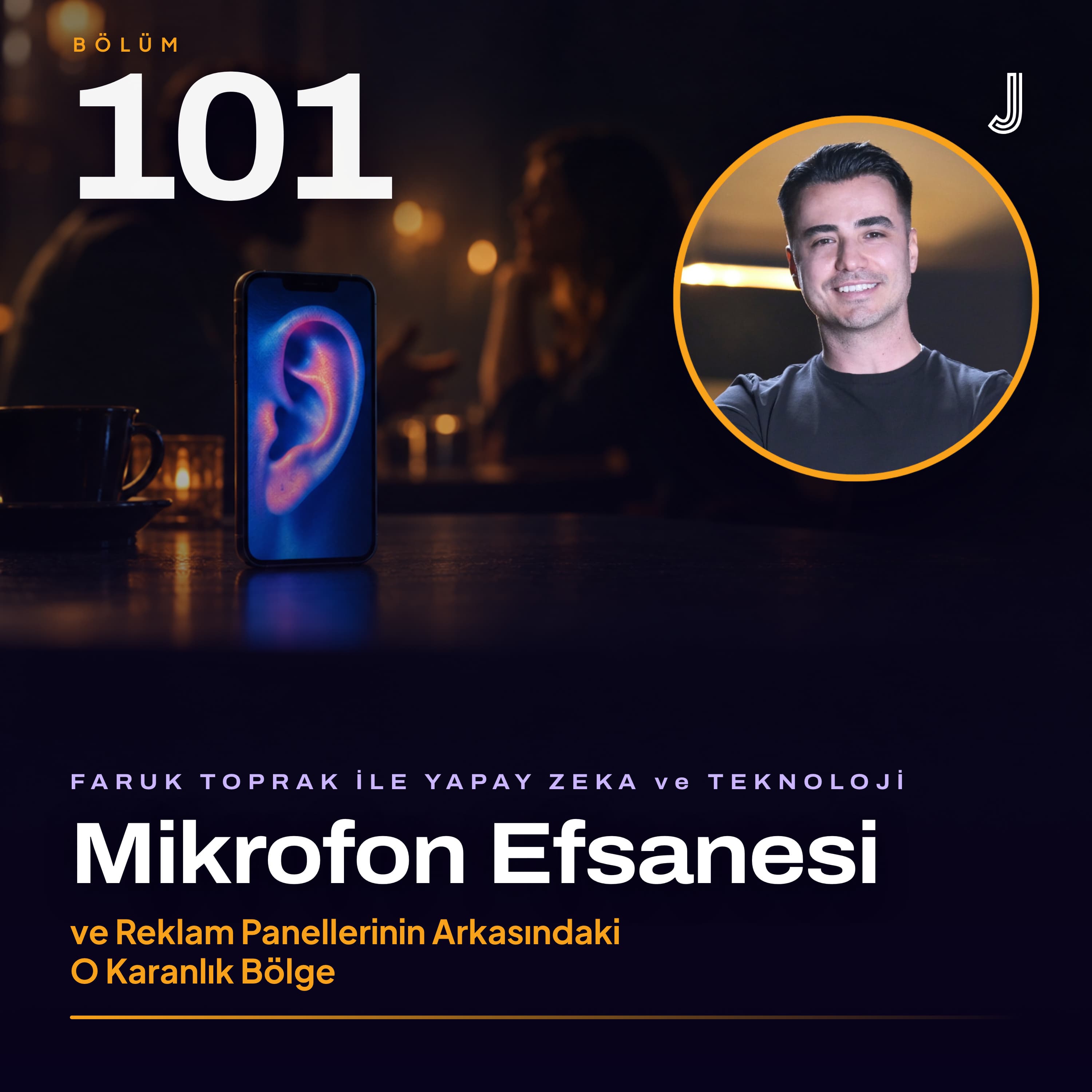
#101 · Mikrofon Efsanesi ve Reklam Panellerinin Arkasındaki O Karanlık Bölge
· 26 min
0:000:00Geçen hafta bir arkadaşınızla kahve makinesi konuştunuz. Hiçbir yere yazmadınız, hiçbir şey aratmadınız. Akşam eve gelip telefonu açtınız, karşınızda kahve makinesi reklamı. O an hepimizin aklından aynı cümle geçiyor: "Ulan bu telefon beni dinliyor."
Bugüne kadar bu soruya iki cevap verildi. Ya "evet, dinliyor" dendi ya da "saçmalama, öyle bir şey yok" dendi. Bu bölümde ikisinin de yanlış olduğunu göstereceğim. Doğru cevap ikisinin ortasında değil, tamamen başka bir yerde. Ve açıkçası ikisinden de rahatsız edici.
Ben yıllardır reklam panellerinin öbür tarafında oturuyorum. O hedefleme ekranlarını kuran kişiyim. Yani bu bölümde dışarıdan bakan birinin tahminini değil, içeriden bakan birinin ne gördüğünü anlatıyorum. Panelde tam olarak neyi görüyorum, neyi görmüyorum, ikisini de söylüyorum.
Bu bölümde: Amerika'da bir yıl boyunca 17.000'den fazla uygulamanın izlendiği o araştırma ve mikrofon yerine bulunan asıl şey. Gerçekten dinleselerdi bunun maliyeti ne olurdu. Sistemin sizi dinlemeden bilmesinin üç yolu: yanınızdaki kişi, size benzeyen binlerce insan ve kendi beyninizin oyunu. "Aktif dinleme" hizmeti satan o gerçek satış sunumu ve ortaya çıkınca ne olduğu. Alexa ile Siri'nin gerçekten dinlediği yer, ki bu bölümün en çok karıştırılan noktası. Verinin geldiği dört kaynak. Ve telefonunuzda beş dakikada yapabileceğiniz üç ayar.
BÖLÜMLER
00:00 Bu bölümde ne var
00:23 Kahve makinesi konuşması
01:38 Aklınızdaki iki tahmin de yanlış
02:09 Başlamadan önce üç soru
02:45 Reklam panelinin öbür tarafında oturan adam
03:07 En yaygın açıklama: telefon dinliyor
03:31 17.000 uygulama tarandı, sonuç ne çıktı
04:17 Dinlemek gerçekten mümkün mü, hesabı yapalım
05:26 01 Yanınızdaki kişi
07:24 02 Size benzeyenler
09:36 03 Seçici dikkat
11:53 Dumanın kaynağı: o satış sunumu
13:16 Alexa ve Siri gerçekten dinliyor, ama nasıl
14:38 Asıl bulgu: mikrofon değil, ekran
15:18 Panelde ne görüyorum, ne görmüyorum
17:07 Doğru cevap: dinlemiyorlar, çünkü gerekmiyor
18:05 04 Veri nereden geliyor: dört kaynak
19:30 05 Ne yapabilirsiniz: üç ayar, beş dakika
21:44 O reklamı bir daha gördüğünüzde kendinize sorun
22:56 Haftaya: aynı ürün, herkese başka fiyat
23:24 Kapanış
Bu bölümde sizi korkutmaya çalışmadım. Yapay zeka hakkında size sürekli iki şey satılıyor: ya korku ya sihir. İkisi de işinize yaramıyor. İşinize yarayan tek şey sistemin gerçekte nasıl çalıştığını bilmek.
Haftaya: aynı ürün, aynı anda, sizin telefonunuzda başka fiyata, başkasının telefonunda başka fiyata. Bu artık bir komplo teorisi değil, resmi kurumların raporlarına girmiş bir konu.
Her Çarşamba yeni bölüm.
Not: Spotify Türkiye'de artık video kabul etmiyor, burada sadece sesi dinleyebiliyorsunuz. Görselli sürüm YouTube'da: YouTube'a girip Faruk Toprak yazmanız yeterli.
Instagram: https://www.instagram.com/faruktoprakx/
Web: https://faruktoprak.com/
Hedef kitle kurgusunu Google ve Meta tarafında en kapsamlı haliyle anlattığım yer: https://joyakademi.com
 Listen ↓
#100 · 100 Bölümde Öğrendiğim 9 Şey (4'ü Artık Doğru Değil)
· 42 min
0:000:002019'da, bu podcast'in ikinci bölümünde bir tahmin yapmışım. Yedi yıl sonra o tahminin yanlış olduğunu, kendi sesimden dinleyeceksiniz.
100. bölümdeyiz ve bu bölümde başarı hikayesi yok. 100 bölümde öğrendiğim dokuz şey var: beşi hala ayakta duruyor, dördü açık açık yanlış çıktı. Yanıldığım o dördünü kendi arşivimden, yedi yıl önce kurduğum kendi cümlelerimle önünüze koyuyorum. Çünkü sektörde herkes tuttuğu tahmini anlatıyor, tutmayanı kimse anlatmıyor. Halbuki para tam olarak orada kaybediliyor.
Bu bölümde ayrıca podcast'in adının neden değiştiğini ve bundan sonra ne olacağını anlatıyorum.
BÖLÜMLER
00:00 Açılış: yedi yıl önce kurduğum cümle
01:53 Bu podcast aslında kaç yaşında
05:02 1. Yanıldım: doğru trend, yanlış oyuncu
08:29 2. Tuttu: AI optimizasyonu insanı geçti
11:47 3. Yanıldım: metaverse mağazaları
14:24 4. Tuttu: TikTok'u ciddiye alın
17:17 5. Yanıldım: üçüncü parti çerezler
20:24 6. Tuttu: WhatsApp reklam alacak
23:09 7. Yanıldım: AR ve VR pazarlaması
26:11 8. Tuttu: uydu interneti
28:52 9. Tuttu: sistem kuran kazanır
32:07 Dokuz dersin ortak paydası
34:02 Podcast'in adı neden değişiyor
37:02 Bundan sonra ne olacak
39:40 Kapanış: sıra sizde
BU BÖLÜMDEKİ DOKUZ KURAL
1. Bir trendi doğru görmek, o trendden kimin kazanacağını bilmek değildir. Yeni ihtiyacı, dağıtım kanalını elinde tutan karşılar.
2. Yeni bir teknolojiyi bugünkü sonucuna göre değil, iyileşme hızına göre değerlendirin.
3. Bir teknolojinin adının konuşuluyor olması onun yaşadığı anlamına gelmez. Para akıyor mu, kullanıcı artıyor mu, geri geliyor mu?
4. Platform takip etmeyin, davranış takip edin. Platformlar ölür, davranış kalır.
5. Herkesin bildiği şey, en son kontrol edilen şeydir. En tehlikeli bilgi yanlış bilgi değil, eskimiş bilgidir.
6. Ürün yol değiştirir, gelir modeli değiştirmez. Ücretsiz aracın sahibinin nasıl para kazandığına bakın.
7. Yeni teknoloji, eskisinin yeterince iyi olduğu yerde kazanamaz. Ancak eskisinin acıttığı yerde kazanır.
8. Teknoloji tahmininde yön bellidir, takvim değildir. Yapay zeka meslekleri bitirmiyor, küçültüyor.
9. Artık en iyi işi yapan değil, o işi yapan sistemi kuran kazanıyor.
BÖLÜMDE GEÇEN ARŞİV KAYITLARI
2. bölüm (2019) AdBlocker, 7. bölüm (Şubat 2020) yapay zeka optimizasyonu, 9. bölüm (2020) uydu interneti, 15. bölüm (Kasım 2023) TikTok ve WhatsApp, 33. bölüm (Mart 2025) metaverse, 36. bölüm (Mart 2025) yapay zeka ajanları, 56. bölüm (Eylül 2025) üçüncü parti çerezler, 72. bölüm (Ocak 2026) sistem kuranlar, 74. bölüm (Ocak 2026) AR ve VR.
KİMLER İÇİN
E-ticaret ve marka sahipleri, ajans ve pazarlama ekipleri, yapay zeka araçlarını işine katmaya çalışan herkes.
Instagram: https://www.instagram.com/faruktoprakx/
LinkedIn: https://www.linkedin.com/in/faruk-toprak-05767164/
Web: https://faruktoprak.com/
Beğendiyseniz takip edin ve bildirimleri açın. Sizin de yıllardır doğru sandığınız ama çoktan değişmiş bir bilginiz var mı? Bana yazın.
 Listen ↓
#99 · Astromarketing Sırlarıyla Güneş Tutulmasında Müşterinin Satın Alma Şifresini Çözmek
· 18 min
0:000:00M.Ö. 585'te Lidyalılar ve Medler kanlı bir savaşın ortasındayken gökyüzü karardı, gündüz geceye döndü. İki ordu kılıçlarını bırakıp diz çöktü ve barış ilan edildi. Thales'in kaydettiği bu ilk güneş tutulması, koca bir tarihi tek hamlede değiştirdi. Bugün 12 Ağustos Çarşamba. Sıradan bir gün değil; muazzam bir Güneş Tutulmasının altındayız. Gökyüzündeki şalterin indiği o kritik gündeyiz.
"Faruk, sen CRO ve nöropazarlama anlatan adamsın, astroloji ne alaka?" diyebilirsiniz. Bugüne kadar size e-ticaretin sadece Meta panelindeki yeşil butonlardan ibaret olduğu söylendi. Excel'deki yaş verilerine taptınız. Oysa asıl veri, insanın evrensel döngülerle olan bağıdır. 99. bölümde, ajans sunumlarını yırtıp atıyor ve masadaki parayı kasanıza sokacak yepyeni bir stratejiyi konuşuyoruz: Astromarketing.
Neden 99. bölüm? Nümerolojide 9 bitişi ve bilgeliği temsil eder. 99 ise eski ezberlerin kapandığı, 100'e yani büyük uyanışa geçtiğimiz eşiktir. Bu eşik, 12 Ağustos Güneş Tutulmasının "eskiyi yık, yeniyi inşa et" enerjisiyle tam örtüşüyor. Kârlılığınızı eriten klasik pazarlama alışkanlıklarınızı bugün tamamen yıkıyoruz.
Bu Bölümde Hangi Ödünsüz Gerçekleri Deşifre Ediyoruz?
Gökyüzündeki Şalter ve "Lunar Effect": Astroloji mistik bir inanç değil; binlerce yıllık insan davranışı veri tabanıdır. Wall Street'te dolunayda borsa getirilerinin düştüğü bilimsel bir gerçektir. %70'i su olan insanın, devasa gelgit yaratan kütle çekiminden etkilenmemesi, amigdalasının buna tepki vermemesi imkansızdır.
Tutulma Enerjisi ve FOMO: Tutulmalar insan psikolojisinde kadersel değişimleri tetikler. Müşteride "hayatımı değiştirmeliyim" dürtüsü uyanır. Kampanyalarınızı bu evrensel takvime ayarlayıp, teknik özellik yerine "dönüşüm vaadi" sattığınızda kasanızın nasıl dolduğunu konuşuyoruz. Bu dönemlerde FOMO kancaları 3 katı etki yaratır!
Merkür Retrosu ve Bilişsel Yük: İletişim gezegeni geri hareketteyken tüketicinin odaklanma süresi düşer, tahammülü sıfırlanır. Bu dönemlerde karmaşık formlarla müşteriyi yormak yerine, neden sadece "Remarketing" yapmanız gerektiğini anlatıyorum. Eski müşteriye dönmek, retrolarda altından değerlidir.
Takvimi Evrenin Matematiğine Uydurmak: CPM'lerin tavan yaptığı maaş günlerini unutun. Yeni Ay'ın coşkusunda lansman yapmayı, Dolunay'ın gerginliğinde ise "risksiz iade ve güven" kancalarıyla satışı nasıl kapatacağınızı öğrenin.
Kampanyalarınızı bu duygusal döngülere göre optimize etmek ve masadaki parayı rakiplere bırakmamak için kanalı hemen takip edin. İşin mimarisini profesyonelce öğrenmek için sizi Joy Akademi'ye bekliyoruz. Biz orada insanlara butonlara basmayı değil, zihin haritalarını çizmeyi öğretiyoruz.
12 Ağustos Tutulma Sürprizi:Eskiyi yıkıp yepyeni bir vizyon inşa etmek isteyenler için muazzam fırsat! Joy Akademi eğitimlerinde ödeme ekranına PODCAST yazarak anında 1.300 TL net indirim kazanın. Bu kod 30 Ağustos'a kadar geçerli. 30 Ağustos'ta bu kapı kapanıyor. Dönüşüm için ilk adımı atın, eğitime katılın veya ajans hizmeti için joykek.com üzerinden bize ulaşın; kasanızı doldurun!
00:00 - 03:00 - İlk Güneş Tutulması ve 99. Bölüm03:00 - 04:34 - Astromarketing Nedir? (Lunar Etkisi)04:34 - 05:40 - Merkür Retrosu ve Remarketing05:40 - 07:00 - Güneş Tutulmasında FOMO Etkisi07:00 - 09:02 - Joy Akademi İndirimi (Kod: podcast)09:02 - 12:20 - Standart Kampanya Günlerinin Zararları12:20 - 15:50 - Yeni Ay ve Dolunay: Amigdalayı Yönetmek15:50 - 18:12 - Kapanış ve Sosyal Farkındalık
 Listen ↓
#98 · Sitenizdeki O Kırmızı Buton Neden Satmıyor? (Görsel Nöropazarlama)
· 13 min
0:000:00Dijital pazarlama sektöründe yıllardır inandırıldığınız, üzerine tonla para harcadığınız ve kâr marjınızı sessizce eriten çok büyük bir yalan var. Sitenizin dönüşüm oranı (Conversion Rate) düştüğünde, e-ticaret müdürünüz veya çalıştığınız ajans elinde süslü bir raporla masanıza gelir ve aynen şu cümleyi kurar: "Trafik çekiyoruz ama satışa dönmüyor. Bence sepet sayfasındaki o 'Satın Al' butonunu kırmızı yapalım. Kırmızı aciliyettir, kan akışını hızlandırır, kırmızı kesinlikle satar."
Sonra gidersiniz yazılımcınıza o butonu kırmızı, turuncu, fosforlu yeşil yaptırırsınız. Hatta üstüne kalp atışı gibi titreme efekti eklersiniz. Meta ve Google'a bastığınız bütçeyi iki katına çıkarırsınız. Peki günün sonunda banka hesabınıza giren o net nakit artar mı? Artmaz. Neden biliyor musunuz? Çünkü karşınızdaki tüketici, bir laboratuvar faresi değil. Tüketici, milyonlarca yıllık evrimle şekillenmiş, modern dünyanın reklam kirliliğinde kandırılmaya karşı inanılmaz bir defans mekanizması geliştirmiş, son derece zeki bir organizma.
Filtresiz Dijital'in 98. bölümünde Meta panellerindeki o teknik ayarları bir kenara bırakıyoruz. Doğrudan o kredi kartını cüzdandan çıkartan karar merkezine, yani insan beynine iniyoruz. Sitenizdeki o butonun renginden bağımsız olarak neden satmadığını, görsel mimarinin insan psikolojisini nasıl manipüle ettiğini konuşuyoruz.
Bu Bölümde Hangi Ödünsüz Gerçekleri Deşifre Ediyoruz?
• Bilişsel Yönlendirme (Gaze Cueing): Sitenize koyduğunuz o muazzam fotoğraflardaki modeller kameraya, yani doğrudan müşterinin gözünün içine mi bakıyor? İşte dönüşüm oranınızın yerlerde sürünmesinin en büyük nedeni bu. İnsan beyni evrimsel olarak neden önce yüzlere, ardından o yüzün baktığı yöne odaklanır? Modellerinizin bakış açısını "Sepete Ekle" butonuna çevirdiğinizde tek satır kod yazmadan satışların nasıl %20 fırladığını deşifre ediyoruz.
• Bilişsel Yük (Cognitive Load) ve Zihinsel Yorulma: İnsan beyni tembeldir ve kalori harcamaktan nefret eder. Müşteriyi ürün sayfasından ödeme sayfasına götürürken karşısına çıkardığınız o uzun üyelik formları, zorunlu şifre belirleme ekranları ve karmaşık adımların amigdalada nasıl bir "tehdit" algısı yarattığını inceliyoruz. Amazon'un "Tek Tıkla Satın Al" patentinin ardındaki devasa nöropsikolojik sırrı paylaşıyorum. Unutmayın: Düşünen müşteri sepeti terk eder!
• Görsel Gürültü ve Karar Felci (Analysis Paralysis): Siteye girer girmez zıplayan WhatsApp butonları, "Çevir ve Kazan" çarkıfelekleri, üstten akan "Son 2 Ürün" sahte sayaçları... Bu görsel kirliliğin müşteriyi satın almaya ikna etmek yerine neden beyninde "panik ve güvensizlik" (Flight Response) yarattığını masaya yatırıyoruz. Lüks ve yüksek dönüşümlü sitelerin neden tertemiz (White Space) olduğunu kanıtlıyoruz.
Eğer e-ticaret sitenizi bir ziyaretçi çöplüğünden bir satış makinesine dönüştürmek, kârlılığınızı artırmak ve rakiplerinizin yıllarca geriden takip edeceği bu nöropazarlama stratejilerini ilk öğrenenlerden olmak istiyorsanız, masadaki parayı rakiplere bırakmamak için şu an bu kanalı hemen takip edin ve bildirimleri açın.
Bu işin görsel nöropazarlama mimarisini bir meslek olarak öğrenmek istiyorsanız Joy Akademi eğitimlerimize katılın. "Faruk, benim operasyonum var, e-ticaret sitemizin Dönüşüm Oranı Optimizasyonunu (CRO) ve bu nöropazarlama kurgusunu bizim yerimize doğrudan siz kurun" diyorsanız, joykek.com üzerinden ajansımızla iletişime geçin. Faruk@joykek.com adresinden bana yazarak markanızın nörolojik röntgenini birlikte çekelim!
00:00 - 01:19 - Kırmızı Buton Efsanesi
01:19 - 03:09 - Karar Merkezi: İnsan Beyni
03:09 - 06:10 - 1. Bilişsel Yönlendirme (Gaze Cueing)
06:10 - 09:19 - 2. Bilişsel Yük: Düşünen Müşteri Kaçar
09:19 - 10:38 - 3. Görsel Gürültü ve Karar Felci
10:38 - 12:35 - Kapanış ve Joykek Stratejisi
 Listen ↓
#97 · Panelden Önceki Karanlık Bölge: Hedef Kitleyi (Gerçekten) Nasıl Hacklersiniz?
· 20 min
0:000:00Meta ve Google reklam panellerinde "Kampanya Oluştur" yeşil butonuna basmayı herkes biliyor. Hangi tuşun ne işe yaradığını, Advantage+ veya PMax kampanyalarının nasıl kurgulanacağını YouTube’daki on dakikalık ücretsiz bir videoyla bile öğrenebilirsiniz. Panel kullanmak kolaydır; çünkü panel günün sonunda kodlanmış basit bir arayüzdür. Peki, sektördeki e-ticaret markalarının %90’ı neden hala reklam bütçesini çöpe atıyor, neden ROAS ekranlarında sahte illüzyonlarla avunup ay sonunda banka hesabında gerçek bir kârlılık göremiyor?
Bu sorunun cevabını, geçtiğimiz günlerde yayınları sıkı takip eden değerli dinleyicimiz Mustafa Altay’dan gelen çok samimi bir itirafla masaya yatırıyoruz. Mustafa’nın sorduğu, aslında bugün milyonlarca lira bütçe yöneten ajansların ve pazarlama direktörlerinin en büyük kanayan yarası: "Abi her şeyi anladım, psikolojiyi ve reklamı anladım ama şu müşteriyi araştırması kısmını, pazardaki müşteriyi anlayıp ona göre reklam çıkma matematiğini bir türlü oturtamıyorum."
Filtresiz Dijital’in 97. bölümünde, reklam panelinden önceki o konuşulmayan "Karanlık Bölgeye" dalıyoruz. Altınızdaki araba bir Ferrari bile olsa, navigasyona yanlış adresi girerseniz sadece yanlış yere çok daha hızlı gidersiniz.
Bu Bölümde Hangi Ödünsüz Gerçekleri Deşifre Ediyoruz?
• Demografik Çöplük ve "Gece 3 Sancısı": Ajansların Excel tablolarına yazdığı "25-45 yaş arası, büyükşehirde yaşayan, yoga yapan kadınlar" gibi içi boş personaların neden birer çöplük olduğunu yüzleşerek konuşuyoruz. İnsanlar yaşlarına veya oturdukları semte göre değil, amigdalalarını tetikleyen acılara göre satın alır. Müşterinizin gece saat 3’te yatağında tavana bakarken hangi problemi yüzünden uyuyamadığını (Gece 3 Sancısı) bulmanın ve ona ürünün özelliğini değil, acısız bir akşamı satmanın formülünü veriyorum.
• Dijital İstihbarat ve Rakip Yorumlarını Hacklemek (Review Mining): Masa başında kahve içerek "bence bizim müşteri şunu sever" deme devri bitti. Pazarın lideri olan en dişli 3 rakibinizin Amazon, Trendyol ve Hepsiburada’daki 1 ve 2 yıldızlı yorumlarını nasıl birer istihbarat madenine dönüştüreceğinizi anlatıyorum. Rakiplerinizin lojistik, kumaş veya müşteri hizmetleri zaaflarını alıp, kendi reklam kampanyalarınızda müşteriyi ensesinden yakalayan o yenilmez kancalara (Hook) nasıl çevireceğinizi adım adım gösteriyorum.
• Sosyal Dinleme (Social Listening) ile "BS Detector"ü Kapatmak: Anket verilerinin neden her zaman yalan söylediğini, rasyonel ön lob ile duygusal satın alma beyni arasındaki farkı inceliyoruz. Ekşi Sözlük, Reddit ve Kadınlar Kulübü gibi insanların maskelerini çıkardığı platformlara sızarak kitlenin sokak jargonunu nasıl kopyalayacağınızı anlatıyorum. Sizin o plaza dilinizi değil, kendi kelimelerini reklam metninde gören müşterinin zihnindeki "yalan savar" (BS Detector) kalkanını nasıl indireceğinizi deşifre ediyoruz.
• Yapay Zekayı Davranışsal Ekonomi Uzmanına Dönüştürmek: ChatGPT veya Claude’u sadece "Instagram metni yaz" diyerek hesap makinesi gibi kullanmayı bırakın. Yüzlerce filtresiz müşteri şikayetini yapay zekaya besleyerek; kitlenin en derin 3 korkusunu, duygusal satın alma tetikleyicilerini ve savunmaya geçtiği kelimeleri saniyeler içinde çıkaran o 2026 model özel "Nöropazarlama Analisti" komutumu (prompt) sizlerle paylaşıyorum.
Siz de bu yayını dinledikten sonra e-ticaret sitenizi ve reklam kurgularınızı birer deneme yanılma tahtası olmaktan çıkarıp, salt bir insan psikolojisi ve veri madenciliği matematiğine dönüştürmek istiyorsanız, masadaki parayı rakiplerinize bırakmamak için şu an bu kanalı hemen takip edin ve bildirimleri açın.
Bu işin sadece panel boyutunu değil, tüketici psikolojisini ve yapay zeka ile pazar araştırması mimarisini bir meslek olarak en ince detayına kadar öğrenmek istiyorsanız Joy Akademi eğitimlerimize katılın. "Faruk, benim operasyonum var, bu derin psikolojik kurguyu ve reklam matematiğini markam için doğrudan siz kurun ve ciromu büyütün" diyorsanız, joykek.com üzerinden ajansımızla iletişime geçin.
 Listen ↓
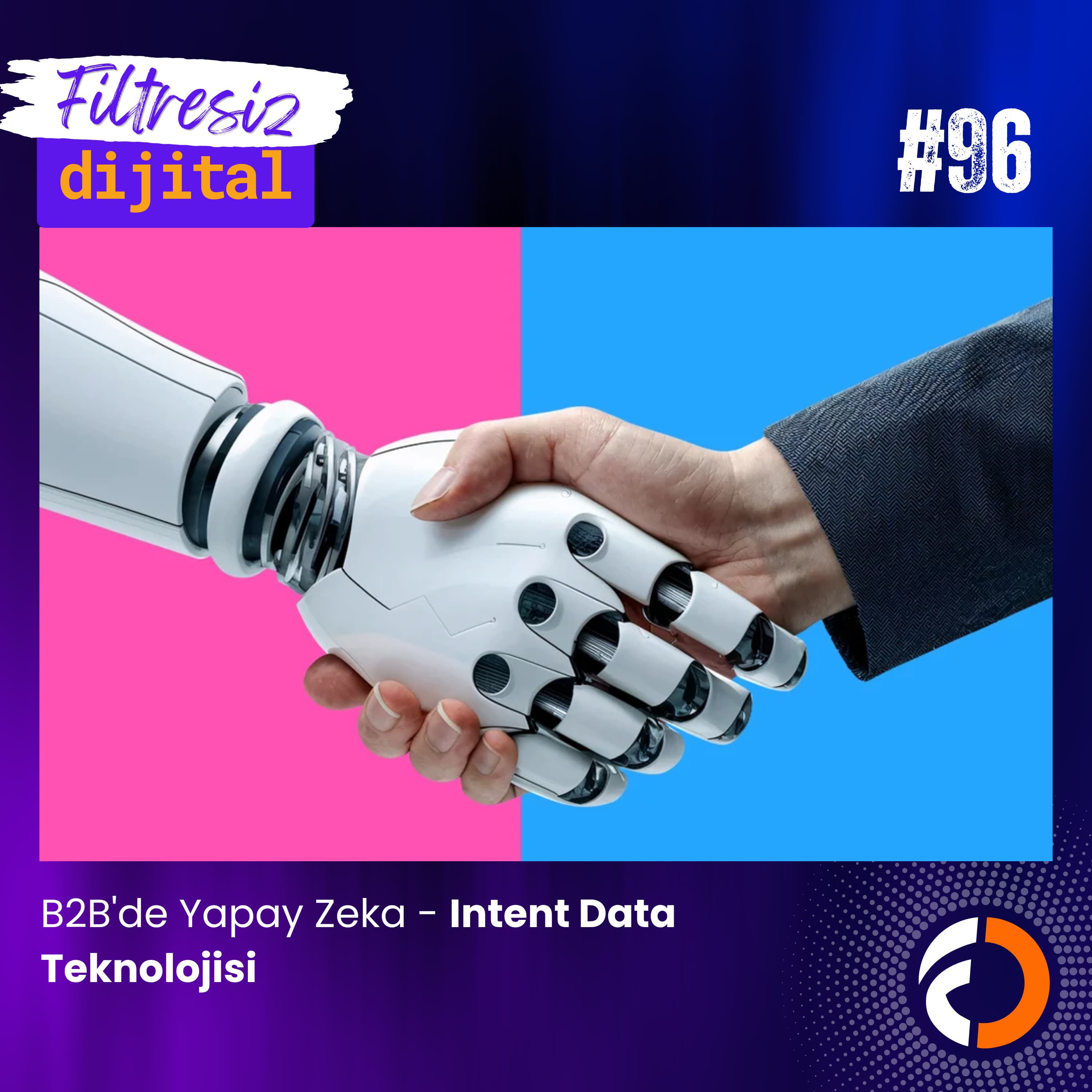
#96 · AI in B2B - Intent Data Technology
· 13 min
0:000:00While Industry 4.0 winds are blowing on factory floors, production lines, and raw material selection; why are you still operating with 1990s reflexes when it comes to selling those tons of goods, pallets, and containers to global buyers?
In episode 96 of Filtresiz Dijital, we're bringing to the table the new and uncompromising mathematics of global trade for manufacturers, large wholesalers, exporters, and B2B brand leaders who don't want to lose the money on the table to competitors. Our topic: AI in B2B Marketing and the New Rules of Global Sales!
There's a very serious paradox that many large-scale trading companies in Turkey fall into. Millions of lira in automation investments, CNC machines, and world-standard production power… But when it comes to finding customers from the global market, the methods used are still from the stone age: Pouring massive budgets into exhausting global trade shows held once a year and waiting for a purchasing manager to happen to pass by your 15 square meter booth, or sending cold messages starting with "We are Turkey's largest manufacturer" to scraped email lists that go straight to spam folders. We're setting aside the fake success illusions cast over the sector. In B2B wholesale or export, you don't need thousands of organic clicks to your website. You need that one purchasing director in Munich who experienced a delivery crisis with his current supplier and is urgently looking for an alternative manufacturer. So how will you detect that this person on the other side of the world is searching for this "right now"?
This is exactly where AI-powered Intent Data and Predictive Analytics come into play. By tracking global search trends, IP movements, and corporate digital footprints, we decode in full transparency how you can see the purchasing intentions of industrial giants in your target market even before they open an official tender (RFQ).
On the corporate decision-making processes and neuromarketing dimension, we eliminate a major mistake: Hacking the Decision Making Unit (DMU). In tonnage sales, there's never just one person at the table; the CEO looks at market share, the CFO at unit cost, and the Factory Manager at technical durability. Using AI's Hyper-Personalization capabilities, we explain in concrete steps how to design precision strategies that will lighten the mental barriers and organizational burdens of these three different decision makers. In this episode, I also share a very realistic and lived success story (case study) from my desk at Joykek, where we used AI's timing intelligence to reduce an industrial manufacturer's cumbersome 12-month sales cycle to just 3 months.
Don't miss this episode to build the visionary marketing infrastructure that this great effort on the production line deserves, move forward with your torch open in the global market, and turn algorithms into your brand's most powerful sales breath.
If you want to transform your B2B company, factory, and export volume into a laser-guided system with the power of AI and get the money on the table into your register, you can write to me directly at faruk@joykek.com or explore our strategic services at joykek.com. You can join our ecosystem by searching "filtresizdijital" on YouTube, Instagram, and TikTok for our video podcast episodes, field-tested case analyses, and behind-the-scenes of the digital world!
 Listen ↓
#95 · AI's E-Commerce Traps - The AI Illusion in B2C | Filtresiz Dijital Ep. 95
· 14 min
0:000:00You've handed your e-commerce advertising register keys to artificial intelligence (AI). But are you aware of how those algorithms you trust so much are actually eroding your profitability?
In episode 95 of Filtresiz Dijital, after our break last week, we're back at the microphone and steering our course toward the hottest and most pressing agenda in e-commerce: The AI Illusion in B2C!
When you turn on Meta's Advantage+ and Google's Performance Max (PMax) campaigns, lean back and say "AI will bring sales anyway, the machine learns," that's actually when the disaster begins. We're setting aside agencies' tales of the "learning process" they hide behind. Are algorithms really spending your budget to find new customers, or are they taking the easy way out and manipulating you by bombarding your existing brand audience who would buy from you anyway? We decode the math and the games playing behind the scenes with complete transparency.
There's also a neuromarketing and consumer psychology dimension to this. Under the name of "personalization," bombarding a consumer who merely glanced at a product on your site with the same visual across every platform for 15 days isn't marketing—it's digital harassment! We're discussing those misguided frequency settings that create "Ad Fatigue" in the consumer's brain, and those so-called "smart" dynamic pricing traps that instantly offer discounts to cart abandoners, cheapening your brand. Plus, we're putting on the table the damage that useless chatbot clutter you installed on your e-commerce site to cut costs—the stuff that frustrates customers—does to your conversion rates (CR).
This episode is perfect for you if you want to abandon ROAS lies and revenue illusions and instead increase real profitability in your bank account and take back control of algorithms from them.
If you want to manage your digital marketing processes and e-commerce ads with strategic intelligence and increase your profitability, you can reach me at faruk@joykek.com or explore our services through joykek.com. Join our ecosystem by searching "filtresizdijital" on YouTube, Instagram, and TikTok for all our video podcast episodes and industry exposés!
Timestamps:
02:01 Podcast Summer Schedule and a Brief Note on Life | 05:07 Upcoming Launch: Software Farm and the Future of AI | 07:59 The AI Illusion in B2C: PMax and Advantage+ | 08:49 Meta Update: Regaining My Account and 5% Extra Ad Cost | 09:31 The Risks of Handing Your Register Keys to Algorithms | 10:36 Personalization or Digital Harassment? (Ad Fatigue) | 11:11 Dynamic Pricing Traps and Brand Value | 11:34 Chatbot Clutter in E-Commerce and the Yataş Example | 12:47 Waking Up From the Illusion: Closing Remarks and Strategy With Joykek
 Listen ↓
#94 · Google's New AI Wall (SGE) Reality! Where Did Your E-Commerce Site's Organic Traffic Go?
· 11 min
0:000:00In episode 94 of Unfiltered Digital, we confront the massive shadow looming over e-commerce and B2B: Google's AI Wall (SGE) and the sharp decline in organic traffic! If you opened your Google Analytics dashboard in early June and saw bright red downward arrows in your SEO data, this episode is your digital wake-up call. We debunk agencies' defense that "summer arrived, people took vacations, traffic dropped." This is 2026's biggest lie. Your traffic didn't go on vacation; Google's artificial intelligence stole the organic traffic you spent millions climbing to the first position for. Welcome to the Zero-Click hell!
In this special broadcast dated June 10, 2026, we discuss why information-seeking queries in the Turkish market have eroded by 40%. Google no longer wants to serve users the classic link list. The blog content you painstakingly wrote is being processed, and users receive a direct summary like a pill. Users close the page without clicking your site. The system processes your content with its own AI, hitting you with your own weapon.
When we dive into the psychological and neuromarketing side, we face a fundamental truth: Cognitive Ease. The human brain is evolutionarily programmed to conserve energy. When a question is asked, the amygdala immediately wants to eliminate uncertainty. We used to visit different sites and search through articles, creating Cognitive Load. Now Google AI says "Don't tire yourself, I put the answer here." At that exact moment, the brain's reward center Striatum kicks in and the Instant Gratification mechanism is triggered.
For valued executives, e-commerce directors, and CEOs, the bitter pill is crystal clear: The game has changed. If you're still asking in meetings "What rank are we on this keyword?" you're playing the wrong game. Being in first position no longer matters; because artificial intelligence is sitting in the zero position. If your agency promises "100% organic traffic growth," end that meeting immediately.
So how will we break through this wall? Here are 3 golden strategies:
Brand Demand (Brand Search Volume): AI can summarize generic searches but cannot summarize brand-specific searches; it sends users to you.
Zero-Party Data: You're only a tenant on Google. When you draw customers to your site, collect phone and email data in your CRM system or get them to install your app.
Experience Selling (EEAT): Information content is doomed to erode. AI cannot experience a product. People come to AI for information, to you for experience and validation.
If you're looking for profitability-focused ad management to protect your brand against Google algorithms, you can reach out through faruk@joykek.com or check joykek.com. For all our video podcasts, search "filtresizdijital" on platforms and send your comments from our Instagram @faruktoprakx account.
0:00 - 1:18 - Summer complacency lie and organic traffic drop1:19 - 2:19 - What is Google's AI Wall (SGE)?2:20 - 3:10 - Zero-Click hell3:11 - 5:11 - Neuromarketing: Cognitive Ease and Instant Gratification5:12 - 6:05 - Bitter pill for CEOs: AI in the zero position6:06 - 7:01 - Strategy 1: Creating Brand Search Volume7:02 - 7:46 - Strategy 2: Zero-Party Data and CRM7:47 - 8:31 - Strategy 3: Selling experience and EEAT8:32 - 9:34 - Those who build their own castles9:35 - 10:41 - Partnership with Joykek and closing
 Listen ↓
#93 · Spotify's Ghost Artists: Who Really Sings That Hit Song You're Listening To?
· 10 min
0:000:00The dark rooms of Spotify, ghost artists, and the chilling rise of AI-generated synthetic music. How are our musical tastes and deepest emotions being hacked by algorithms?
Last Friday evening in Istanbul traffic, I discovered an incredible track on my Spotify "Weekly Discovery" playlist—a perfect blend of 90s Turkish pop and modern trap beats. The chorus was so captivating that I immediately checked the artist's profile. What I found was shocking: No photo, no biography, no social media accounts, yet over 4 million streams! That's when I realized the song that touched my soul wasn't sung by a real person at all. It was a synthetic "ghost artist"—generated in seconds by a few lines of code and AI commands in a cold server room somewhere in America.
Today, over 100,000 new songs are uploaded to Spotify daily. Many of those "hidden hits" you hear in chill, lo-fi, focus, and especially "Spotify Viral 50" playlists are generated entirely by algorithms, untouched by human hands. But how does a machine manage to make us feel "wow, this person has really suffered"?
The secret lies in neuromarketing and consumer psychology. New-generation AI models trained on billions of hours of music data know which frequencies, bass beats, and BPMs trigger dopamine in our brains better than we do ourselves. AI isn't creating art—it's engineering. It converts our emotions into mathematical formulas. It sells us the pain we want to hear, in frequencies our brains will approve of.
When we listen to Sezen Aksu or Müslüm Gürses, we're not just hearing sound waves; we're hearing their lived experiences, traumas, and vulnerabilities. When an artist's voice trembles or goes slightly off-key, that imperfection connects us to them. Because humans are imperfect, and real art feeds on those imperfections. Yet under the guise of "democratizing" the music industry, real artists are now afraid to enter the studio. They face a synthetic competitor that never tires, has no demands, produces a hit song in 10 seconds, and asks for no royalties.
Just as we've grown accustomed to beauty filters on social media and cosmetic surgeries, treating real, natural, and "imperfect" human faces as strange; we now face the same danger in music. As our minds adapt to these "unnaturally delicious but nutritionally empty" synthetic pop songs, real songs sung by real people with minor flaws will start feeling "wrong" or "boring" to us. Filters are no longer just in our photos—they're in our ears, our feelings, and our souls.
After listening to this podcast episode, review your Spotify playlists again. Does that voice in your headphones have a story, lived experiences behind it? Or is it just a piece of code designed to tickle your dopamine receptors?
Find all our video podcast episodes, digital marketing industry analyses, and e-commerce strategies by searching "filtresizdijital" on YouTube, Instagram, and TikTok. Access all resources and detailed industry insights at our website filtresizdijital.com. Happy listening!
00:00 - 01:52 - Ghost artist with 4 million streams
01:53 - 03:12 - Beyond metrics: 100,000 songs uploaded to Spotify daily
03:13 - 04:14 - Hidden dangers in viral playlists and AI's 15-second hook
04:15 - 05:36 - Neuromarketing and music: How algorithms hack our dopamine system
05:37 - 06:49 - The Sezen Aksu and Müslüm Gürses reality: Humans are flawed, AI is engineering
06:50 - 08:00 - Synthetic rivals in studios and the "Beauty Filter" syndrome in music
08:01 - 09:42 - Code snippets in your playlists: A call to return to real connections and closing thoughts
 Listen ↓
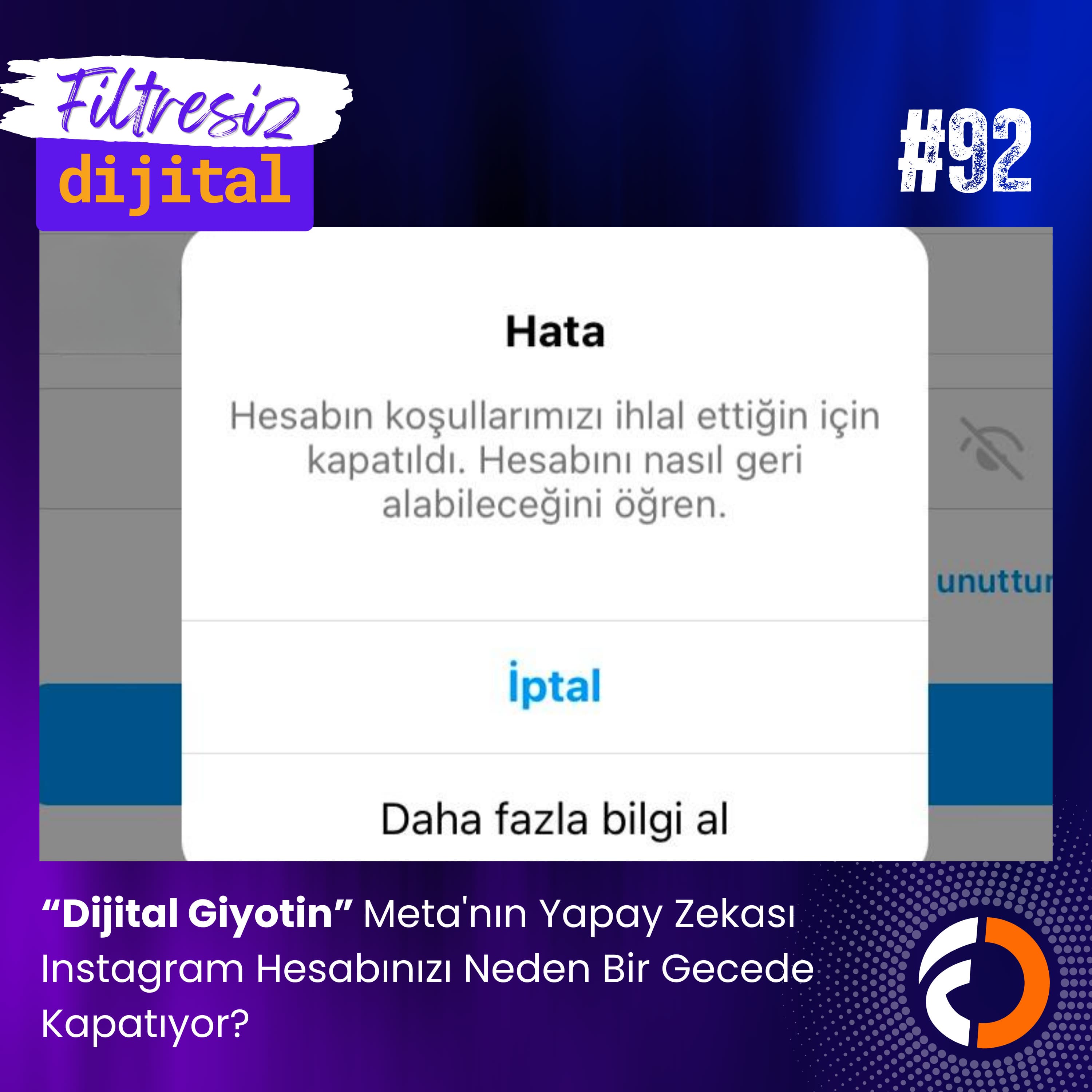
#92 · The 'Digital Guillotine': Why Meta's Artificial Intelligence Closes Your Instagram Account Overnight?
· 11 min
0:000:00In Episode 92 of Filtresiz Dijital, we confront the biggest nightmare of e-commerce sites, digital marketing agencies, and entrepreneurs: Instagram and Facebook accounts being shut down overnight, unjustly! What should you do when you encounter the warning "Your account has been suspended for violating our community guidelines"? How do you protect your digital empire in Meta's unresponsive world? A golden and guide-like episode for those whose Instagram accounts have been closed and those experiencing Meta Business Manager access issues.
In this episode, I explain the reality of the "Digital Guillotine" - how social media accounts you've worked on for years and spent millions of lira on are deleted in seconds by Meta's out-of-control artificial intelligence (AI). After my personal account and Joykek Business Manager access were closed, I share the notarized warning process I sent to Meta Istanbul, the expenses I paid, and the shocking official response I received from Meta's legal office. I also provide critical warnings against fraudster gangs in the market who claim to "open accounts for 1000 dollars, 2000 dollars."
Particularly in Turkey's e-commerce market, we expose the "black market complaint gangs" operating in women's clothing, cosmetics, and jewelry sectors. We discuss in complete transparency this dark system where competitors' accounts are shut down for just $300 in Telegram groups, and how artificial intelligence makes "False Positive" errors in the face of thousands of bot complaints, cutting off your business operations.
On the neuromarketing side, we address the "Endowment Effect". Even if you have hundreds of thousands of followers, you'll painfully realize that this audience doesn't actually belong to you - you're just building a skyscraper without a deed on Mark Zuckerberg's land. Social media is not your property!
So, what should we do to not leave our company's digital assets at the mercy of a single platform? The 3 golden rules that distinguish professionals from amateurs:
First-Party Data: Social media platforms are rental storefronts. You must urgently pull customers to your own website and build your CRM data, email, and authorized phone lists.
Omnichannel Strategy: If 80% of your company's revenue comes from Meta, you're at risk. You should immediately distribute your advertising budget across Google Ads, YouTube, TikTok, and organic SEO efforts.
Zeroing Digital Risks: I explain how aggressive DM automations, copyrighted music, and organic growth software you think are safe get caught on artificial intelligence's radar.
If you're looking for a data-driven and bank account profit-focused strategy in your digital advertising, if you don't want to listen to "learning process" stories, you can meet our professional team at joykek.com.
For our podcast episodes, video analyses, and strategies on all platforms (YouTube, Instagram, TikTok, Web), type "filtresizdijital" in the search bar to join our large library! Don't forget to share your own experiences by sending DM through my personal Instagram account @faruktoprakx. Enjoy listening!
00:00 - 01:38 - Waking up in the morning and seeing your account closed: The big nightmare begins
01:39 - 03:18 - My personal Facebook account being closed and the warning notice I sent to Meta
03:19 - 04:46 - Digital Guillotine: Why is Meta's artificial intelligence unjustly deleting accounts?
04:47 - 05:58 - The dark reality in Turkey: Telegram complaint gangs and dirty competition
05:59 - 07:36 - Neuromarketing: Endowment Effect and Zuckerberg's land
07:37 - 10:16 - Solution Plan: First-party data, Omnichannel, and automation risks
10:17 - 10:59 - Profit-focused strategy with Joykek and episode closing
 Listen ↓
#91 · How to Scale Ad Budget? Why Do Sales Crash When You Increase Budget?
· 14 min
0:000:00When you spend 2,000 TL daily and earn 10,000 TL, you think everything is going great. Green notifications flood your e-commerce dashboard. Then you make that fatal decision: "Since we're earning 10,000 TL on 2,000 TL spend, let's increase the budget to 10,000 TL and make 50,000 TL daily!" You hit that button and the next morning face the painful truth: Sales have crashed, and that ROAS you trusted so much is destroyed. Then comes that classic defense from your agency or consultant: "The algorithm entered the learning phase, let's not touch it for 15 days..."
But is that really what's happening?
In episode 91 on May 20, 2026, we tackle Ad Budget Scaling, the bleeding wound of digital marketing. We uncover the major trap CEOs, CMOs, and e-commerce owners fall into when increasing budgets, breaking down algorithm mathematics and consumer psychology without filters.
What do we discuss in this episode?
Why "corner shop math" doesn't work in Google and Meta algorithms?
AI's "greed trap" and PMax (Performance Max) learning phase
Neuromarketing: The "Ad Blindness" created in consumers' brains when you increase budget (Ad Fatigue)
Rising cost-per-click (CPC) in Turkey's e-commerce market and the damages of vertical scaling (Vertical Scaling)
The 3 Golden Rules for growing without breaking the machine (%20 Rule, Horizontal Scaling, and UX Optimization)
In this episode, I also share a radical personal decision and squeeze in my moving journey from Anatolian Side to European Side (Levent). New office, new vision, and of course the excitement of the upcoming holiday in this episode!
If you're looking for a partner focused on real profitability instead of "learning process" tales in your e-commerce ads, you can explore our team that focuses on your brand's mathematics at joykek.com. For our training programs, you can join our Google Ads and Meta Ads programs at joyakademi.com.
For our video podcasts, industry analyses, and all our content, type filtresizdigital in the search bar on platforms to join our ecosystem. Don't forget to follow me on Instagram at faruktoprakx to share your criticisms and thoughts.
Happy holidays to everyone in advance, enjoy listening!
0:00 - 1:24 - "Since we're earning, let's increase the budget" trap and crashed sales | 1:25 - 3:18 - Preparation for new era: Decision to move to European Side (Levent) | 3:19 - 4:32 - Podcast's new name: Unfiltered Digital and SEO transition strategy | 4:33 - 6:21 - Algorithm's "Greed Trap" and Google PMax update | 6:22 - 7:42 - Neuromarketing: Ad fatigue and amygdala | 7:43 - 9:16 - Bitter truths in Turkey's market: ROAS illusion and rising CPCs | 9:17 - 11:24 - Unfiltered Strategy: How to scale budget without breaking the machine? | 11:25 - 12:41 - Growing is not gambling: Reading data and our new communication channels | 12:42 - 14:02 - Real partnership with Joykek, upcoming holiday celebration and closing
 Listen ↓
#90 · Breaking 89 Weeks of Routine: We Changed Our Name to "Filtresiz Dijital"!
· 12 min
0:000:00Last month, sitting alone in the office at 3 AM, I was looking at the list of 89 episodes I had published so far on my screen. Hundreds of thousands of listens, thousands of messages received, and a growing massive family... But there was a strange unease inside me that I couldn't make sense of. We carried the name "Türkiye'de Dijital Pazarlama" (Digital Marketing in Turkey) with pride until now, but it was starting to feel too small for my shoulders. Because for a long time, we weren't just talking about the "textbook" of digital marketing; we were discussing the psychology of impulsive purchases made at midnight, the grand lies of agencies, and the manipulations behind those %50 off signs—in other words, the "street" of digital.
That night, starting with the 90th episode, I made a big decision. This is not just an ordinary name change; it's a shell-shedding, a rebellion, and a complete return to essence. Nothing will be the same anymore. Welcome to the most transparent, most shocking arena of the industry, the world of Filtresiz Dijital (Unfiltered Digital)!
Do you know why "Unfiltered"? When you open social media, everyone has flawless skin, everyone is a CEO, agencies create wonders, e-commerce panels are thriving. But behind the scenes of this "fake success theater" playing on stage, there are brands bleeding from unprofitability and business owners who can't sleep because of hundreds of thousands of liras burned in advertising budgets. We refuse to be part of this theater! We're ripping off that pretty pink filter that's been pulled over the industry. Now we'll talk not about those fancy lies; but about failed campaigns, millions thrown away, and painful truths. Now the king is naked!
This digital journey actually started in 2007 with my first website built on PHP Nuke and Flash Player infrastructure. Our podcast adventure ignited in 2019 when I noticed in America a trend where people were eagerly learning things through their earbuds instead of music. For 89 weeks, you listened to me on the subway, in the office, while packing cargo packages at night. The messages you sent saying "I saved my brand because of you" have been my greatest medal in this life.
Now we're taking this medal to a massive ecosystem. Not just a voice; we're coming as a visual force on YouTube, Instagram, and TikTok. The heart of this entire transformation will be our new digital headquarters, filtresizdijital.com. As our lives turn into Matrix, we'll no longer just talk about digital marketing, but discuss the entire digital world unfiltered.
Also, the Joy Academy training platform you've been waiting for months has finally launched! On this platform where I share the secrets of Google and Meta panels, I'm doing a final %50 discount in honor of the 90th episode. You can instantly halve the price using the PODCAST code on the cart page. There won't be such a big opportunity again.
Don't forget to support us in this new era and with our new name by voting us 5 stars on Spotify and Apple Podcasts and turning on notifications!
00:00 - 01:28 - Midnight Awakening: Why Are We Changing Our Name?01:28 - 02:44 - Our New Name Revealed: Filtresiz Dijital Manifesto02:44 - 03:44 - Rebellion Against Fake Success Theater and Agency Lies03:44 - 05:10 - The Bond Built With Listeners and My Greatest Medal in Life05:10 - 06:47 - New Ecosystem: filtresizdijital.com and Video Format06:47 - 08:37 - 2019 America Train Journey and the Birth Story of Podcast08:37 - 10:32 - My Digital Journey From 2007 to Today and Audio/Visual Distinction10:32 - 11:16 - Joy Academy Opened: Last Week Special %50 Discount Code11:16 - 11:51 - Digital World Turning Into Matrix and Closing
 Listen ↓
#89 · Not a Discount in May, but "Panic" Selling
· 18 min
0:000:00Welcome to May in the e-commerce ecosystem, where everyone follows the same playbook and advertising budgets turn into rivers of blood. In this eye-opening episode of Unfiltered Digital, we talk about the harsh reality behind those fancy Excel spreadsheets agencies present in every meeting. Just last May, e-commerce volume in Turkey reached 210 Billion TL. But who ate the biggest slices of this massive pie? Those classic brands constantly screaming 50% discounts and filling the screen with red tags? No. Data doesn't lie. The money went to those who sold "emotion and panic," not discounts.
If you're sitting in your office right now wondering what you'll sell this month, the awakening you're looking for is hidden in this episode. May isn't just an ordinary calendar page. It's that grand spiritual gateway where people take off their winter depression cardigans and prepare for summer, hope, and openness. To hack consumer psychology, you first need to understand this state of mind. I explain step-by-step how to touch that "new me" desire inside people during Hidrellez week, how to turn an ordinary discount into a great transformation story. Your customers aren't just expecting a shipping box; they want to buy new versions of themselves.
Then we dive into the great chaos: Mother's Day competition. Those days when Facebook and Instagram panels overflow with millions of liras worth of pink-hearted "Dear Mom" ads, the consumer's brain deletes this banality within seconds. In neuromarketing terms, we call this ad blindness. The way to overcome this blindness isn't through perfect studio shoots, but through reality and that delicate human conscience. Using behavioral marketing rules, I share field examples of how to sell the feeling of "being a good child" instead of the product, how to conquer that busy white-collar customer's heart. You'll see how to leave competitors behind with rule-breaking copy.
May's real secret weapon is the big summer preparation panic that starts toward the end of the month. As temperatures rise and wedding season approaches, that "oh no, I'm not ready" fear people fall into is known in digital marketing as FOMO—fear of missing out. Instead of plainly announcing your new collection, we detail how to manage your customer's panic feeling and turn that add-to-cart button into their only salvation. I give you the math of how to explode sales just by making them feel time is running out, without screaming discounts.
If you want to stop being a pawn in e-commerce chess, burning ad budgets, and instead move to the side that creates games and controls algorithms, you're in the right place. In this new era where we've removed digital's fake filters, I show you all the secrets of creating brands from scratch and entering the consumer mind practically at joyakademy.com. Only for visionary members of this family—grab 50% off instantly at checkout with a PODCAST code. While competitors follow the playbook, you build the system.
After listening to this episode, don't forget to send it to that friend who keeps discounting and sinking, support us with 5 stars on Spotify and Apple Podcasts. The Unfiltered Digital family keeps growing—see you next week with a brand new truth!
What other tactics did this episode spark for you? What panic of your customers can you turn into sales?
01:53 - Introduction to selling emotion over discounts in e-commerce chess
03:19 - Hidrellez effect in consumer psychology
06:19 - Rising ad costs (CPM) reality on Mother's Day
08:20 - Using NLP techniques to sell the feeling of peace of mind
10:16 - Summer preparation panic and FOMO syndrome
11:45 - Joy Academy for those who want to be game creators in e-commerce
13:19 - E-commerce as human engineering philosophy
14:31 - Episode 90 big surprise announcement
 Listen ↓
#88 · The "TikTok Made Me Buy It" Psychology in E-Commerce #TikTokMadeMeBuyIt
· 12 min
0:000:00It's 2:30 AM... Have you ever wondered why you bought that plastic product you never needed, that you'll probably never use even once in your lifetime, with just a single click and without thinking twice? In this shocking and eye-opening new episode of Filtresiz Dijital, we're laying bare the massive phenomenon that has rewritten the rules of e-commerce and that even giant brands still can't fully figure out – the "#TikTokMadeMeBuyIt" psychology. I'm explaining in complete transparency and without filters how TikTok, thought to be just an entertainment platform where kids dance, actually hacks the weakest points of the human brain and transforms into a massive sales machine within seconds.
We're starting the episode with a very real story that I'm sure will feel familiar to many of you. We're discussing how a 40-year-old man, a finance manager at a huge holding company with analytical thinking, ended up buying a battery-powered mini desktop vacuum because of a 15-second video that appeared on his screen at midnight. But is this just an algorithmic coincidence? Absolutely not! Here, neuromarketing and a relentless dopamine loop come into play. How does the TikTok algorithm, just like a slot machine, put your brain into a trance state (Alpha brain waves) by offering small rewards with each swipe? How do we lose our rational thinking ability in that trance and make purchases purely based on emotions? We're breaking down this entire chemical process step by step.
Of course, there's not just a technical and algorithmic side to this; the issue has a much deeper spiritual and psychological dimension. The darkest but most real secret of marketing is this: people always feel incomplete. In the grand rush of the modern age and under the pressure of perfectionism, we all carry a cosmic void inside us. What's actually being sold in those videos isn't the technical specifications, quality, or materials of the product; it's the life of that perfect, relaxed, and "problem-free" person in the video. Content creators (UGC) who step in front of the camera in their pajamas, unfiltered and unmade-up, saying "I found the thing that saved my life," are crushing those million-dollar studio productions for exactly this reason. People are no longer buying plastic; they're buying authenticity and that "feeling" that will soothe their own wounds.
So, if you're doing e-commerce or have a brand, how can you harness this massive power for your own benefit? In this episode, I'm giving away the field tactics that agencies keep hidden from you for tens of thousands of liras. How do you hook your viewer in the first 3 seconds (Hook strategy)? You'll learn through very clear examples why sound design (ASMR) and those "satisfying" sounds trigger the brain's sense of touch, why reverse psychology like "Don't buy this!" suddenly explodes sales.
If you want to step out from the side that constantly spends money on e-commerce, empties their wallet, and scrolls videos; and move to the smart side that creates the system, directs human psychology, and makes the money, you're in the right place. Joy Akademi, where I explain all these invisible rules of digital marketing, algorithm hacking strategies, and the process of creating a brand from scratch with screen sharing, is finally on air. I have a special gift for the real e-commerce warriors who listen to this podcast: go to joyakademi.com, use the code "PODCAST" on the cart page, and instantly get 50% off.
Don't forget to send this episode to that friend who does crazy shopping in the middle of the night right after you listen! You can boost our algorithm power by leaving us 5 stars on Spotify and Apple Podcasts, and you can follow us and turn on notifications so you don't miss new episodes.
01:25 - 02:34 Episode Introduction and Our Goal02:34 - 03:16 Brands Underestimating TikTok03:16 - 04:42 Dopamine Loop and Neuromarketing04:42 - 06:55 Purchasing Psychology and the Void06:55 - 09:18 3 Tactics That Explode Sales09:18 - 10:44 Joy Akademi and Discount Code10:44 - 12:05 Closing and Main Idea
 Listen ↓
#87 · Act 2 in Artificial Intelligence: Anthropic Secrets and Use Cases Only Professionals Know
· 14 min
0:000:00The first act has closed, where everyone in the digital world parroted "ChatGPT" and copy-paste AI texts turned the internet into a massive landfill. Now, the second act is opening—one that completely changes the game and is whispered about only by seasoned professionals behind the scenes! In this exciting new episode of the Unfiltered Digital podcast, we lay bare on the table Anthropic (and its legendary Claude model), the secret weapon of the e-commerce and digital marketing world, with complete transparency. If you're tired of those soulless, plastic, and robotic texts that start with "As the rapidly changing digital world...", loosen your ties; this episode will completely transform your vision.
As we reach 2026, we face a harsh reality: Agencies and major brands have stopped hiring junior-level personnel. Because AI is doing those standard blog posts, translations, and product descriptions flawlessly at zero cost in seconds. So is the commerce system eating itself? No! The system is simply evolving. Now, companies don't just need task-doers, but strategist professionals who "manage" AI like a grand orchestra conductor. And it's at this exact breaking point that Anthropic enters the stage—a company founded by brilliant engineers who rebelled against OpenAI's speed and profit-focused approach and left the company. While ChatGPT tries to pitch to you like a robotic barker, Claude—Anthropic's model—works like an "empathetic" strategist who understands your customer's emotional traumas and context.
In this episode, I explained those special use cases one by one with case analyses that will instantly elevate your e-commerce and export operations and broaden your horizons while listening. For example, when exporting a towel you produce in Turkey abroad through e-commerce, just translating the language isn't enough. I shared how to write a trust-building text with Claude that appeals to a German consumer's functionality and certification obsession, and how to make that deep cultural localization when selling the same product to the UK based on luxury bathroom experience expectations. Plus, I detailed how you can instantly analyze your competitors' 5,000 customer reviews on Amazon or Trendyol, find that product's weakest point, and create a powerful advertising scenario for your own brand.
However, there's a very important philosophical and human truth we must not forget: Artificial intelligence has never fallen in love, lost sleep worrying about the end-of-month credit card bill, or gotten wet in the rain. Commerce is conducted through human psychology, and the purchasing decision is entirely an emotional process. AI is merely your operational assistant; the real intelligence that will forge that human connection is you. And that's precisely why the Joy Academy Training Panel we've worked on for months has finally opened to help you join the new era's "unstoppable" marketers! You can access our screen-shared and completely field-oriented trainings where we teach you to be the orchestra conductor of digital marketing directly at joyakademi.com. The train is leaving; don't fall behind in this revolution!
After listening to this episode where we broke industry conventions and discovered AI's real power, don't forget to share it with your newly graduated friends suffering from unemployment stress or that entrepreneur friend wanting to multiply their sales. Remember to leave a 5-star rating on Spotify and Apple Podcasts for Unfiltered Digital and turn on notifications so you don't miss new episodes. Enjoy listening!
(00:00) The Job Crisis for New Graduates (02:25) What is Anthropic and What Makes It Different (04:25) Cultural Localization in Export (08:04) Competitor Analysis and Ad Scenario (10:21) Human-Centered Perspective (11:25) Joy Academy and Discount Code (13:43) Closing
Episode archive
(106 episodes)
- #106 Pazarlamada Yapay Zekanın Gerçekten İşe Yaradığı 7 Alan ve Reklam Panelinin Size Göstermediği Deney
- #105 İnsanlar Gelecekte Nasıl Para Kazanacak? Yapay Zekanın Kimseye Söylemediği 4 Kazanç Kapısı
- #104 Yapay Zeka Mesleğinizi Almayacak (Asıl Tehlike Çok Daha Sinsi)
- #103 30 Saniyelik Sesinizle Hayatınızı Kopyalayan O Korkunç Senaryo
- #102 Aynı Ürüne Neden Senden Daha Fazla İstiyorlar?
- #101 Mikrofon Efsanesi ve Reklam Panellerinin Arkasındaki O Karanlık Bölge
- #100 100 Bölümde Öğrendiğim 9 Şey (4'ü Artık Doğru Değil)
- #99 Astromarketing Sırlarıyla Güneş Tutulmasında Müşterinin Satın Alma Şifresini Çözmek
- #98 Sitenizdeki O Kırmızı Buton Neden Satmıyor? (Görsel Nöropazarlama)
- #97 Panelden Önceki Karanlık Bölge: Hedef Kitleyi (Gerçekten) Nasıl Hacklersiniz?
- #96 AI in B2B - Intent Data Technology
- #95 AI's E-Commerce Traps - The AI Illusion in B2C | Filtresiz Dijital Ep. 95
- #94 Google's New AI Wall (SGE) Reality! Where Did Your E-Commerce Site's Organic Traffic Go?
- #93 Spotify's Ghost Artists: Who Really Sings That Hit Song You're Listening To?
- #92 The 'Digital Guillotine': Why Meta's Artificial Intelligence Closes Your Instagram Account Overnight?
- #91 How to Scale Ad Budget? Why Do Sales Crash When You Increase Budget?
- #90 Breaking 89 Weeks of Routine: We Changed Our Name to "Filtresiz Dijital"!
- #89 Not a Discount in May, but "Panic" Selling
- #88 The "TikTok Made Me Buy It" Psychology in E-Commerce #TikTokMadeMeBuyIt
- #87 Act 2 in Artificial Intelligence: Anthropic Secrets and Use Cases Only Professionals Know
- #86 From Men's Monopoly to Women's Revolution: "Turkey's E-Commerce Map"
- #85 Trust or Trend? What Should Be the Communication Tone of Financial Brands on Social Media?
- #84 Don't Run Ads Without Listening! Avoid the Dunning-Kruger Trap
- #83 The "Let Me Google It" Era is Ending: TikTok is the New Search Engine
- #82 The End of 'AI Made It, We Shared It' Era: The Revenge of Original Content
- #81 How Industrial Companies Find Customers with LinkedIn: The Secret Channel of B2B Sales
- #80 Middle East Crisis Silently Hitting Your Ad Performance
- #79 Do Women's Day Campaigns Really Work or Is It Just Perception?
- #78 Why 90% of Digital Marketing Learners Never Make Money
- #77 7 Mistakes Why Ads Work But Sales Don't Come | E-Commerce Marketing
- #76 You Can't Convince Everyone with One Ad: The Reasons Why and the Reality of Character
- #75 Why People Click and Why They Leave: Secret Codes of Sales with Gestalt Psychology
- #74 Open the Camera, Start Selling: Next-Generation Marketing with AR VR
- #73 The Era of One-Size-Fits-All Ads is Over: Hyper-Personalized Marketing
- #72 8 Major Disruptions That Will Transform Marketing From Top to Bottom in 2026
- #71 A Heartfelt Conversation on the Last Day of the Year
- #70 Short Drama Videos: The Format That Will Dominate Social Media in 2026
- #69 Everything We Know About E-Commerce is Changing with Shopify 2026
- #68 Who Is More Powerful on the Internet Men or Women? Surprising Truths of the Digital World
- #67 The Marketing Formula That Takes Gyms to the Top in Digital
- #66 Winter Season Marketing Strategies: The John Lewis Example
- #65 Black Friday Special Series - Marketing Strategies, Techniques and Consumer Action Tactics
- #64 The Three Layers of the Body and Hidden Dynamics That Shape Sales in Marketing with Guest Umut Vural
- #63 Does the Algorithm Have Feelings? Who is a Valuable User in the Algorithm's Eyes?
- #62 How to Make Users Dependent on Your Brand with Micro-Interactions? Discover the Power of UX Psychology
- #61 Neden Kullanıcılar 7. Günden Sonra Uygulamayı Terk Ediyor? Retention’ın Görünmeyen Anatomisi
- #60 Thousands Download Mobile Apps But Nobody Opens Them! What's the Real Problem?
- #59 Humanity: Version 2.0, The New Era Beginning with SORA
- #58 Personalization and Artificial Intelligence in Customer Experience
- #57 I'm Sharing the B2B Opportunities I Found on LinkedIn
- #56 Explaining Digital Advertising Trends for Fall 2025
- #55 Seasonal Transformation Has Begun! Let's Boost Sales After Summer Break 🚀
- #54 Eylül’de Reklam Stratejileri Nasıl Olmalı? Okullar Açılıyor Markalar Ne Yapmalı?
- #53 Psychological Triggers in Marketing Copy (Why Do Some Words Sell Better?)
- #52 The Power of Colors: Brand Strategies That Touch Emotions
- #51 Retaining Existing Customers Over Acquiring New Ones: Customer Retention Marketing Strategies
- #50 Summer is Here, Conversions Stopped! What Should Your Marketing Plan Be During Holiday Season?
- #49 Marketing Processes in Corporate Companies: Agency Interactions and Strategic Approaches
- #48 We Reviewed Ads with Our Student Who Graduated from 30-Week Digital Advertising Training!
- #47 How Google I/O Search Engine Updates Are Changing SEO?
- #46 Next-Generation Digitalization Formula for Manufacturers and Wholesalers (Those Who Try Win)
- #45 The Rise and Impact of Micro-Influencers on Social Media
- #44 The Role of Personalization and Automation in Email Marketing
- #43 Creating Interactive Marketing Campaigns with QR Codes
- #42 ChatGPT's New "Shopping" Feature. How Will E-commerce and Performance Ads Be Affected?
- #41 Business Graduate or Programmer? Which Majors Are Dominating Digital Marketing in Turkey?
- #40 How Bot Accounts Buy Trending Topics on X (Twitter): The Impact of Social Media Manipulation on Digital Marketing
- #39 How Economic Crisis Transformed Digital Consumption: What Marketers Should Do
- #38 The Most Powerful Advertising Platforms List for Beginners and Experts
- #37 Why Was Espressolab Targeted? How to Protect Your Brand During a Crisis?
- #36 Smart Automation with Make.com: The Secret to 10x More Efficient Work!
- #35 The Shocking Way to Reduce CPA by 50% in Facebook Ads!
- #34 B2B Sales Advertising Strategies That Explode Your Revenue
- #33 Which Marketplace Wins in Which European Country? Complete E-Commerce Guide!
- #32 300% Ramadan Conversion! Apply This Touch to Your Ad Campaigns!
- #31 What is GTM and Why Every Marketer Should Use It
- #30 Valentine's Day Campaign Strategies to Skyrocket Your Sales
- #29 New Advertising Platform Launched - Meta Begins Testing Ads on Threads
- #28 The Balance is Shifting in AI: DeepSeek Takes the Stage
- #27 What is Ad Blindness? Secrets to Standing Out in Digital Noise
- #26 Instagram Shutdown in Turkey! How to Overcome This Crisis?
- #25 The Art of Customer Acquisition and Sales Funnel Tactics
- #24 Google Ads and Targeting: How Can You Improve Your Performance?
- #23 From Shopify Expert - Why You Should Choose Shopify and How to Increase Your Sales on Shopify
- #22 The Importance of CRM for Businesses and Benefits of Using CRM
- #21 Advertising Board Decisions and Limits in Commercial Communication
- #20 Methods for E-commerce Companies to Improve Google Ads Through Merchant Center
- #19 Marketing Strategies for Success on Etsy
- #18 AI-Powered E-commerce and E-export Sales Growth Techniques
- #17 Display Ads vs Social Media Ads: Which is More Effective for Businesses?
- #16 Conversion Metrics and Values That Drive Business Success With Digital Advertising
- #15 We're Back with You - Remarketing Strategies in Social Media Advertising
- #14 What is the Social Media Law, When Will Facebook Ad Restrictions End?
- #13 WordPress WooCommerce E-commerce Sites Advantages and E-commerce Advertising Formulas
- #12 Google Shopping Ad Campaign Strategies
- #11 Most Popular Mobile App Publishers in Turkey and How to Earn Money from Mobile Apps
- #10 How to Sell in Virtual Marketplaces and Sales Increase Techniques
- #9 Starlink Satellite Internet Will Completely Change the Digital World
- #8 How COVID-19 Digital Ads Affected the World - What Can We Do During This Period?
- #7 Big Data Explained, How to Become a Data Analyst, Differences Between Tableau and Python
- #6 2019 Season Finale - Verizon Media's Impact on Digital Marketing and B2B Marketing Strategies on Bing
- #5 New Advertising Models and Strategies for Digital Marketing in 2020
- #4 Google Smart Shopping Ads Usage and Turkey Example - Black Friday is Coming, Are You Ready?
- #3 What's Happening to YouTube and Netflix, and Important Tips About Google Ads Search Network and Display Ads
- #2 Digital Marketing Innovations and Updates: Google Ads Account Optimization Methods
- #1 Introduction to Digital Marketing - Key to Success in Google Ads
Never miss an episode
Don't miss a new episode: subscribe on Spotify or join the newsletter - I share the summaries.